Wondering whether you can update a Troon home, protect a mountain view, or add an outdoor feature without creating a surprise problem later? In Troon, those questions matter more than many buyers and owners expect because exterior changes are closely reviewed and the community’s design standards are meant to preserve desert character, open space, and long-range views. If you are buying, selling, or planning improvements in Troon, understanding how the rules work can help you avoid delays, protect value, and make smarter decisions. Let’s dive in.
How Troon design review works
Troon Village is a 1,400-acre master-planned golf community in North Scottsdale with about 1,300 home sites and 12 sub-associations. The master association governs construction, remodeling, and exterior activities, and it publishes standards and procedures for a wide range of exterior work.
In practical terms, most exterior changes need approval before work begins. Troon’s standards state that all exterior changes and landscape modifications require Architectural Review Committee, or ARC, approval, and sub-association rules may be even more restrictive.
That means the review process is not limited to major construction. It can apply to projects that owners sometimes assume are minor, such as repainting, exterior lighting, landscaping, windows, garage doors, gutters, cameras, walls, fences, roofs, pools, spas, solar equipment, and satellite equipment.
Why Troon has strict guidelines
The standards are designed to preserve a consistent Southwest desert appearance and reduce disruption to the Sonoran Desert setting. The stated goals include minimizing impacts on natural features and protecting property values across the community.
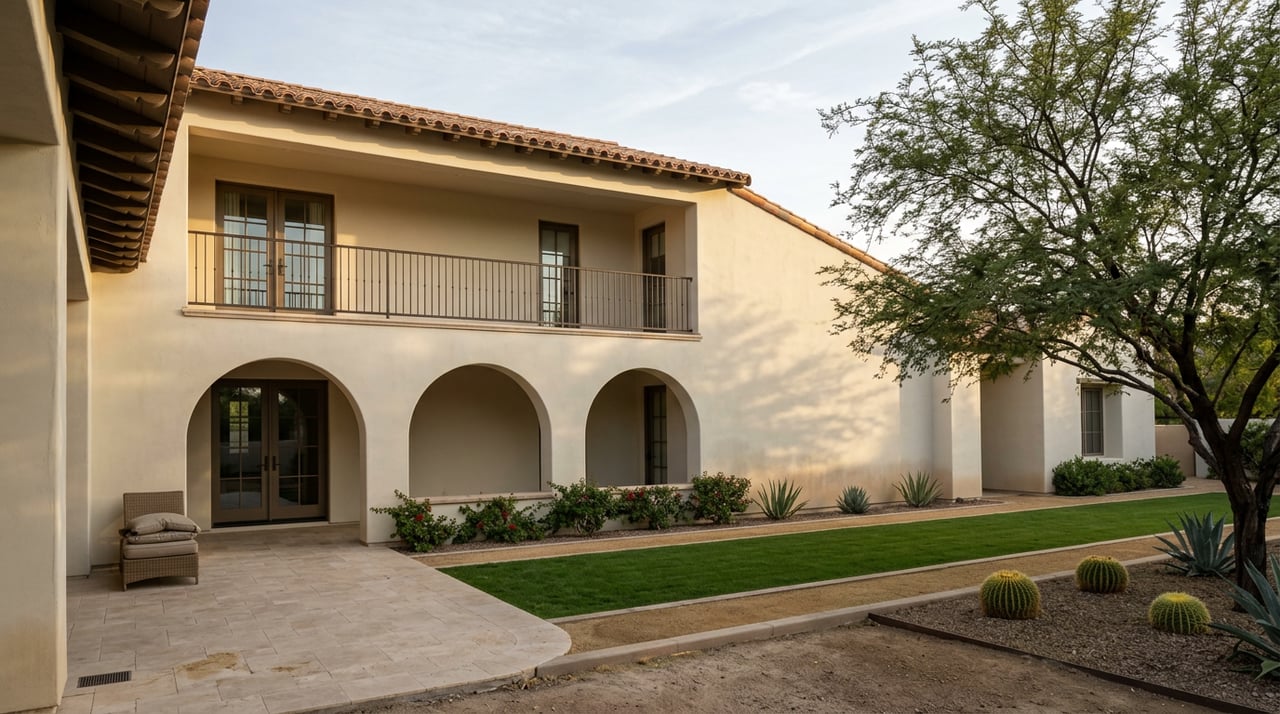
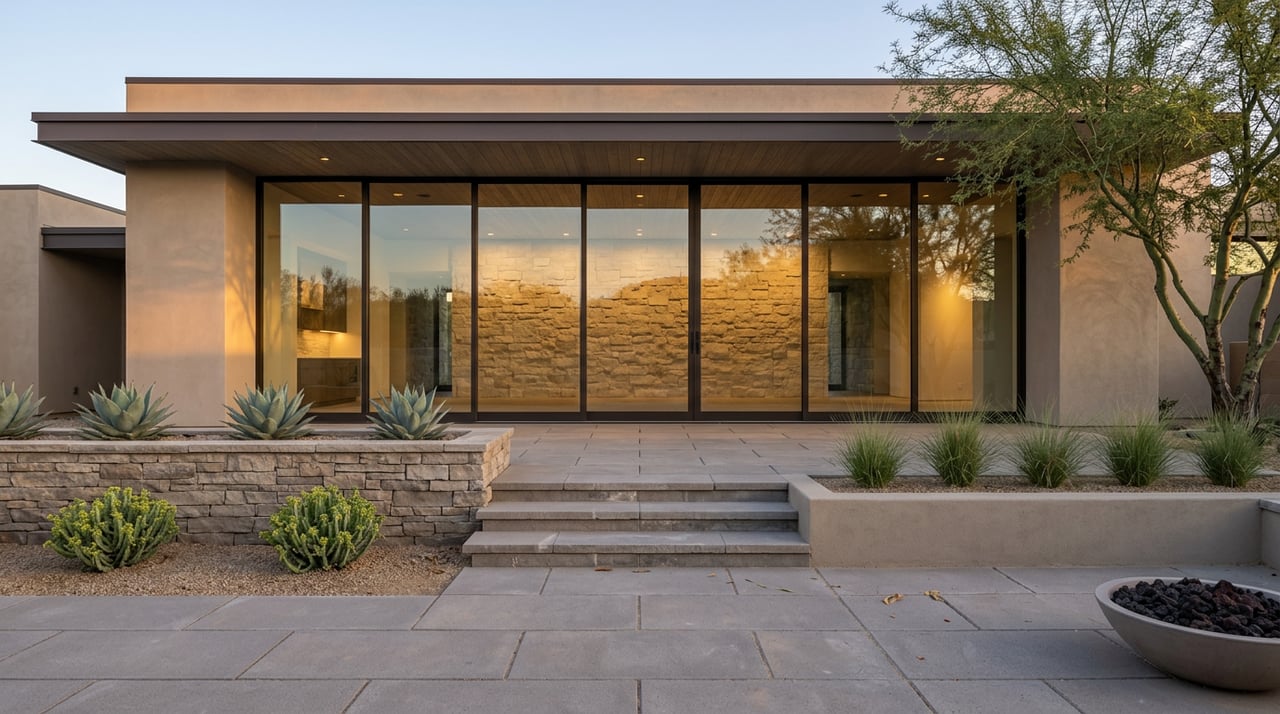
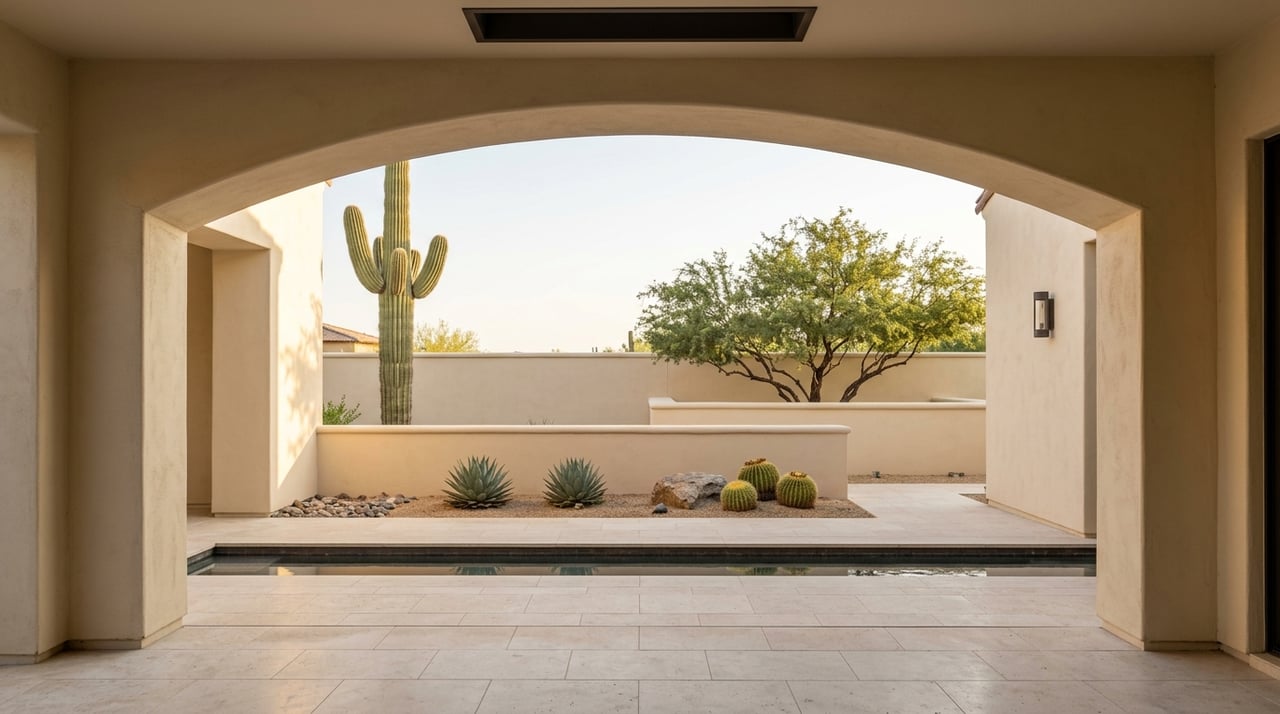
You can see that intent in the design language. Troon favors low horizontal massing, deep overhangs, desert-appropriate colors and materials, non-reflective finishes, and four-sided architecture for custom homes that may be visible from several vantage points.
For buyers and sellers, this matters because the appeal of Troon is tied to more than a single house. It is also tied to the visual experience of the community, including desert open space, thoughtful siting, and a built environment that does not overpower the landscape.
What “view corridors” mean in Troon
Troon does not appear to use one single standalone rule labeled “view corridor” in its HOA materials. Instead, views are protected through several overlapping controls that shape where and how improvements can be built.
Those controls include approved development envelopes, Natural Area Open Space that must remain undisturbed outside the envelope, easement restrictions near golf course areas, height limits, and a preference for view fencing over solid walls. Together, these standards help preserve openness and reduce visual blockage.
So if you are evaluating a lot or a resale home with a prized outlook, the better question is not whether a view is guaranteed forever. The better question is how much of the lot and surrounding area is already constrained by envelopes, setbacks, height rules, NAOS, and easements.
Key lot rules that affect views
Several Troon standards can directly affect what can be built and how much visual impact it may have. These rules are especially important if you are considering a remodel, an outdoor structure, or a custom-home purchase.
Here are some of the main controls noted in the current standards:
- Maximum improvement height is 20 feet
- Pitched roofs may go up to 4 in 12
- Walls cannot exceed 8 feet and may not average more than 6 feet
- Golf-course rear setbacks can be as much as 40 feet for improvements over 6 feet tall
- Golf-course easement areas require prior ARC approval and Troon Country Club approval
These limits can shape sightlines in a very real way. A planned addition, ramada, wall, or raised feature may fit your wish list, but still face restrictions based on height, location, or visibility from neighboring lots and open areas.
Why development envelopes matter
One of the most important concepts in Troon is the development envelope. This is the portion of the lot where improvements are generally allowed, while areas outside that envelope may be protected as Natural Area Open Space or affected by other limitations.
If you are buying with future plans in mind, this is a critical document to review early. A large lot does not always mean a large buildable or improvable area, especially when NAOS, setbacks, and easements reduce what can actually be changed.
That is one reason some view lots feel especially valuable. In Troon, value often comes from preserving desert character and open visual space, not from maximizing lot coverage.
Landscaping, walls, and outdoor features
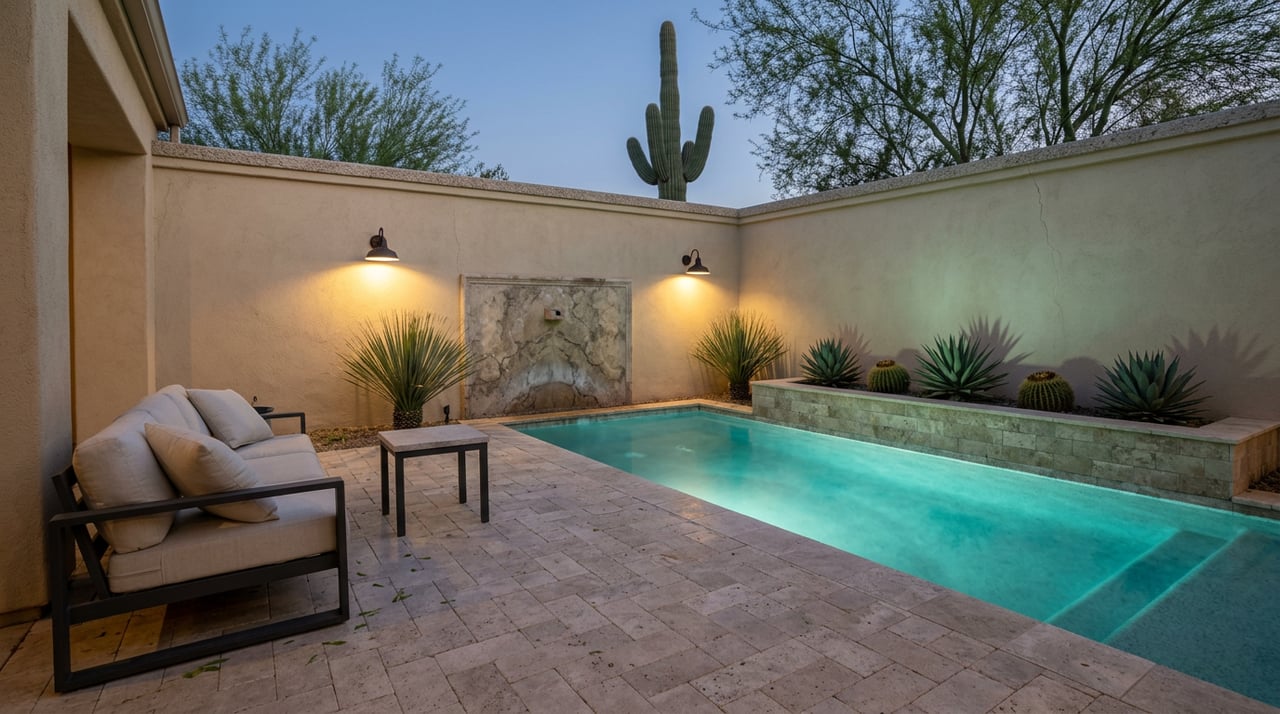
Landscaping choices can play a big role in both compliance and appearance. Troon’s standards emphasize a desert-appropriate palette, and Scottsdale adds another layer by requiring native plant inventories for single-family building-plan review and permits for removal or relocation of protected native plants.
Scottsdale also states that indigenous or desert-appropriate plants are the preferred palette for NAOS and related landscape areas. If you are planning a major exterior update, it is smart to think about landscaping as part of the full approval picture, not as an afterthought.
Walls and fences also deserve close attention. Troon’s preference for view fencing over solid walls aligns with the broader goal of maintaining openness, and Scottsdale’s Foothills Overlay says walls and fences should be used only when necessary, should follow the desert terrain, and should not disrupt NAOS or wildlife corridors.
City rules still matter
HOA approval is only part of the process. Scottsdale makes clear that CC&Rs are civil contracts between owners and associations, and the city does not enforce them.
At the same time, some projects that do not require a city permit may still need planning approval to confirm setbacks, easements, and design standards. Scottsdale notes that this can apply to items such as low-voltage landscape lighting, small hardscape projects, small non-retaining walls, and small detached structures.
That creates a common point of confusion. City review does not replace HOA review, and HOA approval does not automatically satisfy city requirements.
What buyers should verify before closing
If you are buying in Troon, especially in 85262, design guidelines should be part of your due diligence and not a detail left for later. This is particularly true if you are counting on a future pool, outdoor structure, expanded patio, or protected view.
A smart review typically includes:
- The exact sub-association documents for the property
- The recorded development envelope
- Any Natural Area Open Space on the lot
- Golf-course or other recorded easements
- Current setback and height limitations
- Whether the lot fronts a scenic corridor or sits near one
- Whether the home has exterior changes that may not have been approved
This kind of diligence can help you avoid buying a home that looks perfect today but limits your plans tomorrow. It can also help you assess whether an existing improvement may create a resale issue later.
What sellers should know before listing
If you own a Troon home and plan to sell, exterior compliance can affect both buyer confidence and transaction smoothness. Buyers in this market often care deeply about views, lot use, and whether a home’s outdoor features were properly approved.
If you have added lighting, repainted, changed landscaping, replaced windows or doors, updated walls, or built an outdoor feature, it is worth confirming your paperwork early. A question about approvals can surface during escrow, and it is usually easier to address before the home hits the market.
This is also where neighborhood-level guidance matters. In a community like Troon, value is often tied to the relationship between the house, the lot, and the surrounding desert setting, so preparation should go beyond basic staging and pricing.
Timing and enforcement are important
Troon’s process has real deadlines and consequences. The standards say submittals are due at least five business days before the ARC meeting.
Starting work without approval can lead to a stop-work order and fines of up to $500 per day. For owners planning a project, that makes early planning essential.
If you are comparing homes and one has obvious exterior changes, it is reasonable to ask whether approvals were obtained. That is not just a technical issue. It can affect risk, timeline, and future marketability.
How to think about views realistically
In Troon, a great view is often one of the community’s biggest draws, but it should be evaluated carefully. A view may feel wide open today while still being subject to the neighboring lot’s allowed envelope, setbacks, and height restrictions.
That does not mean views are unprotected. It means they are protected through a layered framework rather than a simple promise.
For that reason, the strongest buying decisions usually come from reviewing the lot-specific documents, not relying on assumptions. If a view is central to your decision, the paperwork behind the lot can be just as important as the view itself.
Whether you are buying a view property, preparing a Troon home for sale, or trying to understand what you can change after closing, clear guidance can save time and stress. If you want a local read on how design standards, lot constraints, and resale value intersect in Troon and North Scottsdale, connect with Christina Rathbun for thoughtful, neighborhood-specific guidance.
FAQs
What exterior changes in Troon usually need ARC approval?
- Troon’s standards state that all exterior changes and landscape modifications require ARC approval before work begins, including items such as repainting, landscaping, lighting, windows, garage doors, walls, fences, roofs, pools, spas, and solar equipment.
What do view corridors in Troon actually depend on?
- In Troon, views are generally protected through development envelopes, NAOS, easements, height limits, setbacks, and fencing preferences rather than one standalone rule labeled as a view-corridor policy.
What is the maximum height for improvements on a Troon lot?
- Troon’s standards note a maximum improvement height of 20 feet, with additional rules that can affect roof form, setbacks, and structures near golf-course areas.
Can you build a pool or ramada at a Troon home?
- Possibly, but it will usually require HOA review, and city approval may also apply depending on the scope and size of the project.
Does Scottsdale enforce Troon HOA rules?
- No. Scottsdale says CC&Rs are civil contracts between owners and associations, and the city does not enforce them.
What should a buyer review before purchasing a Troon home in 85262?
- A buyer should review the sub-association documents, the recorded development envelope, any NAOS or easements, applicable setback and height rules, and whether the home has exterior changes that may not have been approved.