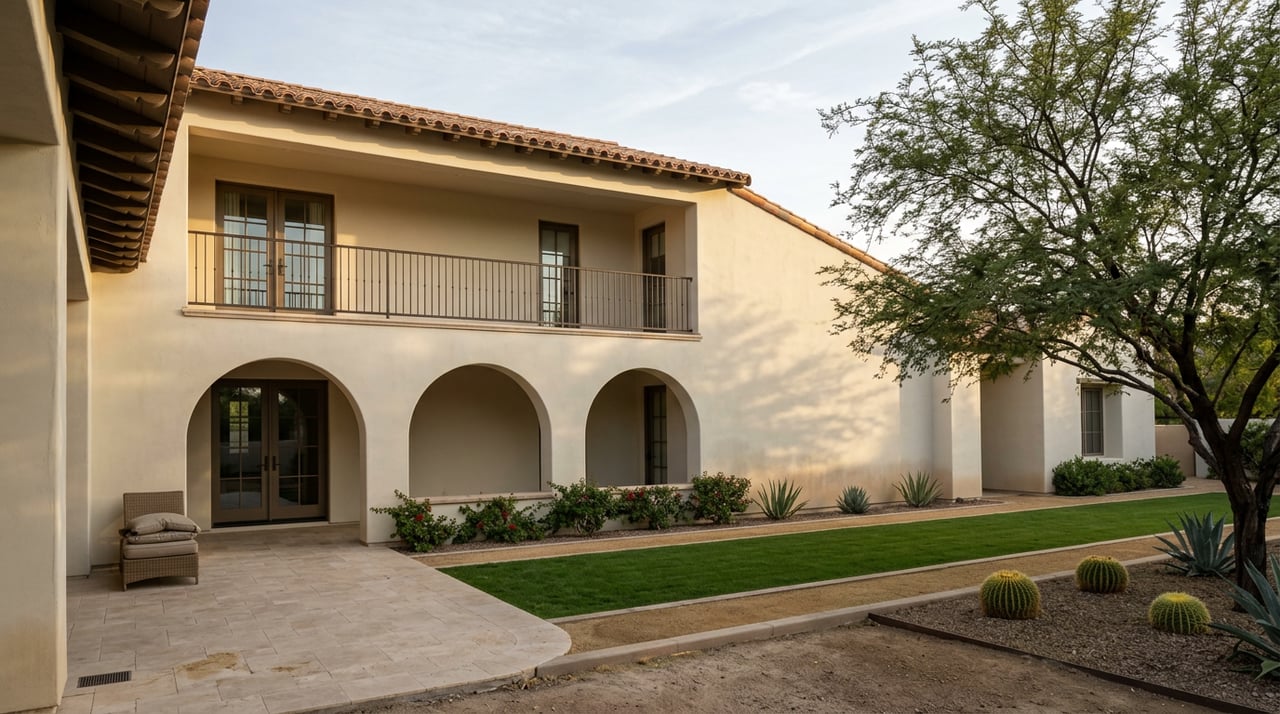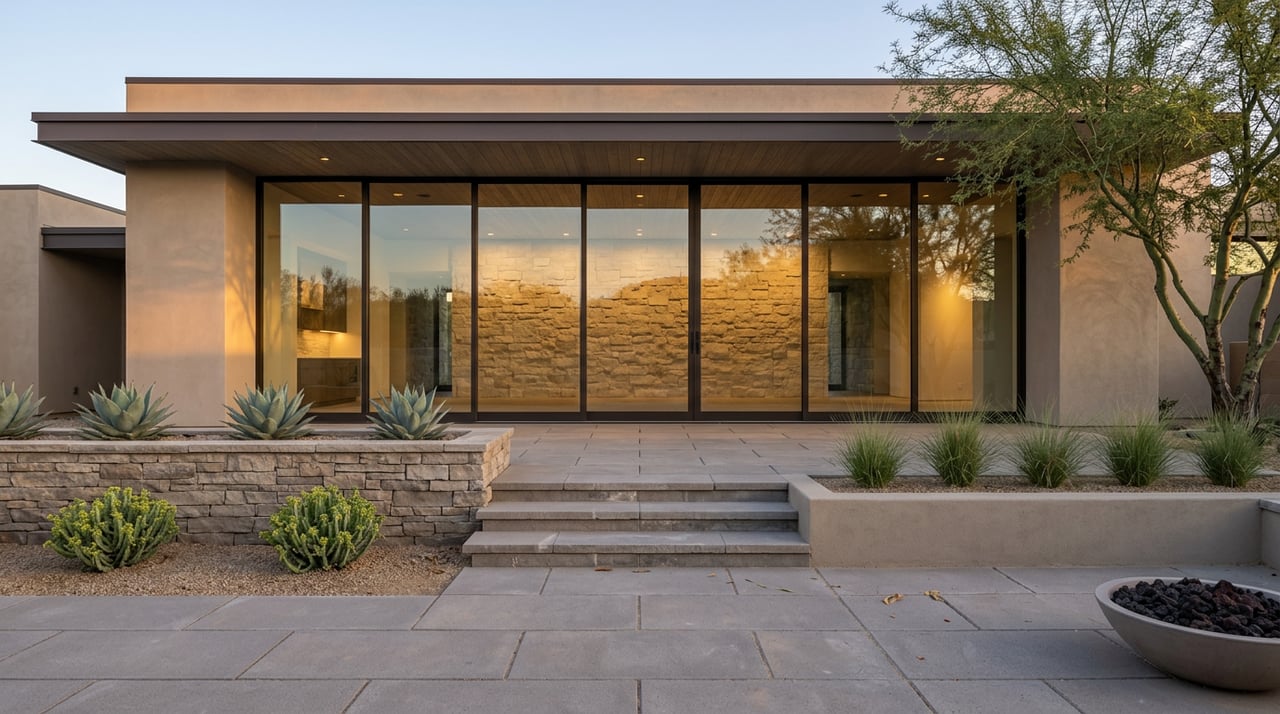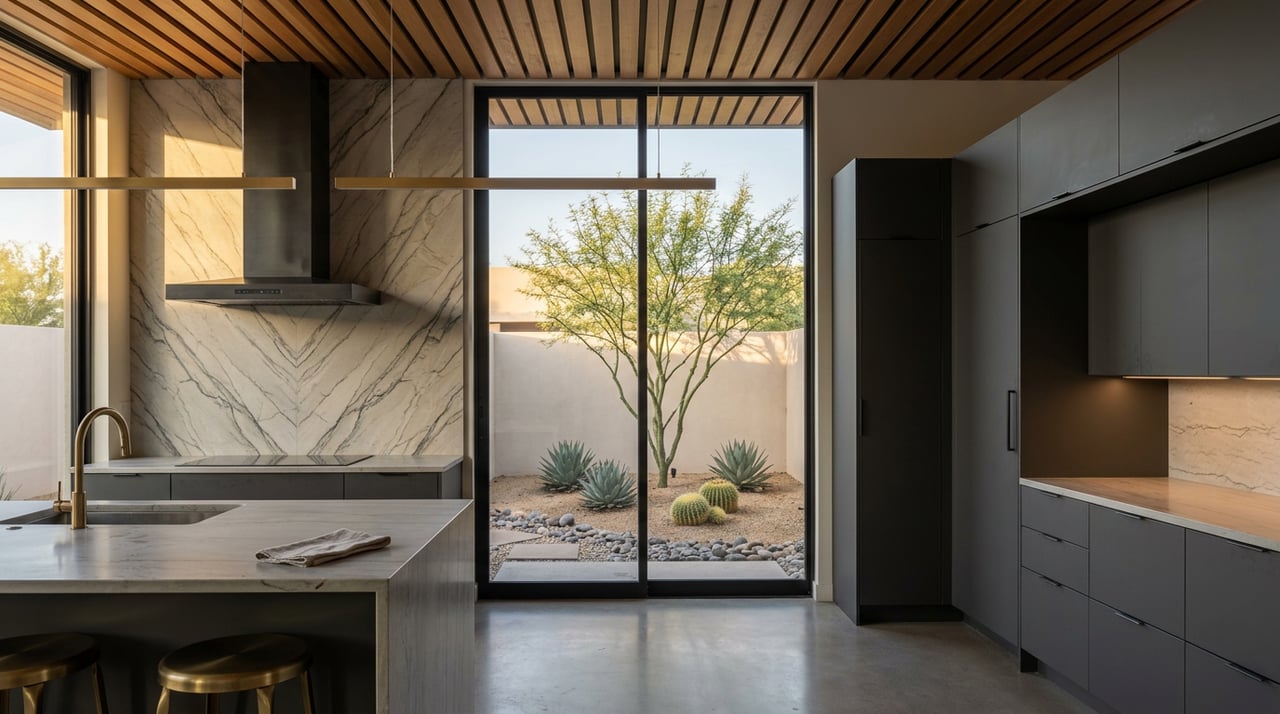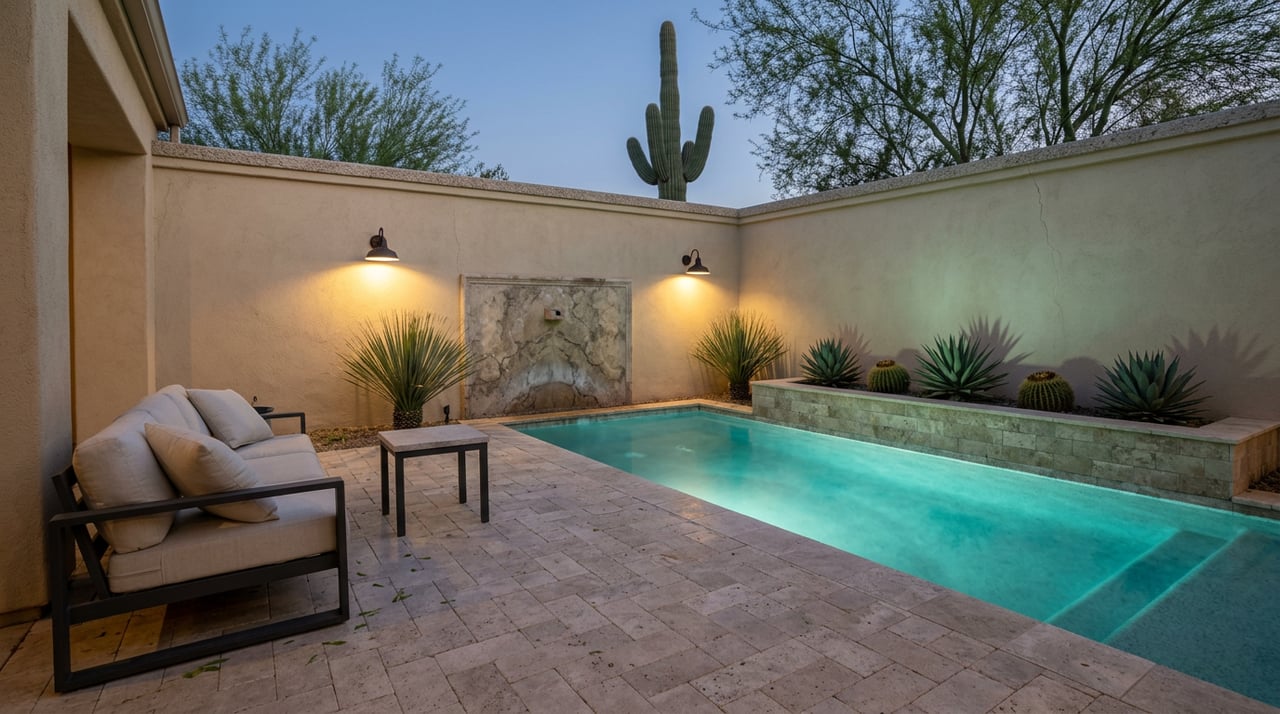
If you are thinking about buying luxury new construction in Paradise Valley, you are stepping into one of Arizona’s most exclusive and complex home markets. The appeal is easy to understand: newer design, modern systems, and the chance to own a home tailored to today’s luxury lifestyle. But in Paradise Valley, buying new construction is not just about the house itself. It is also about the lot, the review process, the timeline, and the premium that comes with turnkey luxury. Let’s dive in.
Paradise Valley New Construction at a Glance
Paradise Valley sits at the top of the Phoenix luxury market by almost any measure. Zillow reports an average home value of $3,451,504 as of February 28, 2026, along with 190 homes for sale, a median list price of $4,873,817, and 48 new listings that month.
At the same time, Redfin’s February 2026 data shows a median sale price of $6.2 million and median days on market of 38. Those figures come from different methodologies, but together they make one thing clear: Paradise Valley is a high-value market where buyers should expect significant price variation depending on lot, design, and level of finish.
For new construction specifically, the premium is even more pronounced. Active new homes are listed around $9.985 million, $9.999 million, $11.999 million, and $13.999 million, according to Redfin’s Paradise Valley new-construction page.
Why New Construction Commands a Premium
In Paradise Valley, new construction often sits at the top of the market. That premium reflects more than updated finishes. You are often paying for a combination of new systems, current architecture, move-in readiness, and the difficulty of creating a new luxury home in a town with high land values and a detailed review process.
There is also a land component that cannot be ignored. In February 2026, The Real Deal reported that a 4.8-acre Paradise Valley parcel sold for $14.3 million cash, with the existing house likely headed for demolition. In an area where many lots span 2 to 10 acres, teardown parcels can still trade like trophy assets.
That helps explain why new construction pricing can climb so quickly. The purchase price may reflect not only the finished home, but also the cost of acquiring a rare parcel, clearing the site, navigating approvals, and carrying the project through completion.
Lot Selection Matters More Here
A lot in Paradise Valley is not just a place to build. It shapes what you can design, how the home sits on the site, and how long the approval path may take.
According to the Town’s 2022 General Plan, Paradise Valley places strong emphasis on preserving mountain peaks, ridges, and visually significant corridors. The Town also identifies Lincoln Drive and Tatum Boulevard as important streetscape corridors.
For you as a buyer, that means view corridors, massing, and street presence carry real weight. Two properties with similar acreage can present very different opportunities depending on topography, visibility, and the type of review required.
Hillside vs Non-Hillside Parcels
One of the first questions to answer is whether the parcel is hillside or non-hillside. That distinction affects the review path in a major way.
The Town’s Hillside Building Committee reviews hillside projects for code compliance tied to land disturbance, heights, lighting, materials, grading, and drainage. Hillside projects also require added documentation and protections.
Under the Town’s review guide, hillside applications may require a construction staging plan, financial assurance, increased insurance, and a hillside safety improvement plan. Non-hillside projects are reviewed at staff level and do not have those hillside-only requirements.
That difference can affect both your budget and your timeline. If you are comparing two lots, this is one of the most important factors to understand early.
Understand the Permit and Approval Process
Luxury new construction in Paradise Valley involves a formal municipal process. The Town requires electronic permit submission, and a building permit application is required for any structure over 8 inches with a fixed location on the ground.
That includes a single-family residence, guest house, ramada, fountain, or sport court. Each structure needs a separate application, which is important if your vision includes multiple buildings or accessory features.
If the project involves a teardown, the Town states that a demolition permit is required any time more than 12 linear feet of wall, fence, roof, or slab is removed. That can be especially relevant in Paradise Valley, where some buyers purchase older homes primarily for the land.
When Entitlements May Be Needed
Some projects need more than standard permits. If a property requires a variance, lot split, or other zoning relief, the Town’s Planning Application Portal says a pre-application is required for many requests.
Variance requests and zoning interpretation appeals are heard by the Board of Adjustment. In practical terms, that means some homesites come with a cleaner path to construction than others.
Before you commit, it is smart to ask whether the parcel already has any approvals in place or whether key entitlement work still lies ahead. In Paradise Valley, the land-and-entitlement side of the deal can be just as important as the home design itself.
Budget Beyond the Build Price
Many buyers start with a per-square-foot construction number, but that number alone rarely captures the full cost of a Paradise Valley new build. The National Association of Home Builders says luxury residence construction can run from $200 to $500 or more per square foot depending on materials and customization.
In Paradise Valley, it makes sense to treat that as a starting point rather than a full budget. Land acquisition, demolition, site prep, permitting, review requirements, and potential hillside obligations can add meaningful cost on top of hard construction expenses.
This is one reason buyers should look at the total project picture, not just the quoted build number. A seemingly less expensive lot can become a more expensive project if grading, approvals, or entitlement issues are more involved than expected.
Plan for a Longer Timeline
If you want a quick move, custom new construction may not be the fastest path. U.S. Census data shows owner-built single-family homes averaged 13.3 months from start to completion in 2022, while contractor-built custom homes averaged 11.8 months.
Those are broad national benchmarks, and Paradise Valley buyers should often think in terms of months to years once design review, permits, and site conditions are factored in. A project on a hillside parcel or one that needs zoning relief may add more steps before vertical construction even begins.
If you are relocating or buying a seasonal home, timeline planning matters. You may want to weigh whether you prefer a finished spec home, a custom build journey, or a renovated resale that offers a faster move-in.
New Build vs Renovated Resale
Not every luxury buyer in Paradise Valley needs to choose new construction. In some cases, a high-quality renovated resale can offer a compelling alternative.
According to Redfin’s Paradise Valley listings, renovated or reimagined resale homes can appear at lower price points than current new builds, with examples around $3.895 million, $4.7 million, $4.999 million, and $6.4 million. That does not make them inexpensive, but it does show that the gap between new construction and resale can reach several million dollars.
What You Are Really Comparing
A new build may offer:
- Current architecture and floor plans
- New systems and materials
- Lower immediate maintenance needs
- Turnkey convenience if already completed
A renovated resale may offer:
- Faster move-in potential
- Less schedule risk
- Strong lot value at a lower price than new construction
- A better fit if the renovation quality is high and the site is exceptional
For many buyers, the right choice comes down to what premium you are willing to pay for customization, newness, and move-in readiness.
Questions to Ask Before You Buy
Before committing to luxury new construction in Paradise Valley, it helps to slow down and ask the right questions early.
Key Questions for Buyers
- Is the parcel hillside or non-hillside, and which review track applies?
- Has the project already gone through any required pre-application or entitlement process?
- Which permits are needed for the main house and any guest house, pool, grading, demolition, or accessory structures?
- What town-specific requirements could affect cost, such as staging plans, financial assurance, or added insurance?
- What is the realistic closing-to-move-in timeline after design review and permitting are added?
- If you are comparing a spec build to a renovated resale, what premium are you paying for land, architecture, and turnkey condition?
These questions can help you avoid surprises and compare opportunities more clearly. In this market, a beautiful home should also be a well-understood purchase.
A Smart Way to Approach the Search
Buying luxury new construction in Paradise Valley takes more than scrolling listings. You need a clear view of pricing, lot quality, entitlement risk, and realistic timelines.
That is where local guidance can make the process smoother. When you understand how a parcel fits within the Town’s review framework and how pricing compares across new builds and renovated resales, you can make a more confident decision.
If you are exploring Paradise Valley luxury homes and want a thoughtful, concierge-level approach, connect with Christina Rathbun. She can help you evaluate opportunities with the local insight and careful guidance that complex luxury purchases deserve.
FAQs
What is the typical price range for luxury new construction in Paradise Valley?
- Current active new homes in Paradise Valley are listed around $9.985 million to $13.999 million based on Redfin’s new-construction listings, while overall market pricing varies depending on methodology and property type.
What makes Paradise Valley new construction more expensive than renovated resale?
- New construction often includes a premium for land, newer systems, current design, move-in readiness, and the cost of approvals, demolition, and site preparation.
What is the difference between a hillside and non-hillside lot in Paradise Valley?
- Hillside lots go through the Hillside Building Committee review process and may require added items like staging plans, financial assurance, increased insurance, and a hillside safety improvement plan, while non-hillside projects are reviewed at staff level.
What permits are required for building a luxury home in Paradise Valley?
- The Town requires a building permit application for structures over 8 inches with a fixed location on the ground, and separate applications may be needed for the main house and other features like guest houses, ramadas, fountains, or sport courts.
How long does it take to complete a luxury custom home in Paradise Valley?
- National benchmarks show roughly 11.8 to 13.3 months for custom or owner-built single-family homes, but Paradise Valley projects can take longer once review, permitting, and site-specific factors are added.
Should you buy a spec home or a renovated resale in Paradise Valley?
- A spec home may offer turnkey luxury and newer construction, while a renovated resale may provide a quicker move-in and lower schedule risk at a potentially lower price point, depending on the lot and scope of updates.